
Youth Center Discharge Paths
The official Adair Youth Development Center page describes a state DJJ program on the Appleby Drive campus. It serves youth after adjudication and focuses on treatment. That role differs from the nearby secure detention center, which holds a serious-charge pre-adjudication population. It also differs from every adult corrections category.
DJJ explains that a youth who completes a development-center program may discharge home or step down to a group home, private child-care placement, or therapeutic foster care. A step-down reduces the restrictiveness of placement but may continue supervision, treatment, and case requirements. A transfer to another setting is not the same as ending all juvenile authority.
Confirm an Adair Discharge
The assigned case team, attorney, juvenile court, and authorized DJJ contact hold the useful information. Start with the person or office already named in case paperwork. A general public request cannot replace proof that the requester is entitled to receive protected details.
- Identify the youth and the requester's authorized role through a secure agency channel.
- Ask whether the program transition is planned, approved, or already completed.
- Confirm whether the destination is home, a group home, private child care, foster care, or another facility.
- Request the effective date and the court or DJJ authority controlling the move.
- Obtain current pickup, transport, treatment, and supervision instructions from the assigned contact.
A planned completion date can change. Treatment progress, placement availability, transport, court action, or case needs may affect timing. The final authorized notice and placement record are stronger evidence than a predicted date. Do not treat an expected program milestone as an executed discharge.
Adair Development Center Contact
The official DJJ facility page is the right starting point for basic information and agency routing. Staff may not disclose whether a named youth is present or where that youth will go unless the caller is authorized. Ask for the case-specific route rather than asking for a roster.
Appleby Drive campus
Columbia, Kentucky
Kentucky Department of Juvenile Justice
Use the official DJJ facility page for current contact routing.
The research identifies the Youth Development Center on the same campus as the juvenile detention center but does not provide a separate verified public telephone number for this program. The nearby center's number should not be assigned to the development center without confirmation. Current agency information is safer than an inferred contact.
Adair Step-Down Placements
“Released” is too broad unless the destination is named. Going home is different from moving to a group home. Therapeutic foster care combines a family setting with treatment supports. Private child care can refer to an approved program placement rather than ordinary private childcare. Each route can carry conditions that are not visible to the public.
| Transition | What it generally means here | Record to confirm |
|---|---|---|
| Home discharge | Return to an approved home under the controlling plan | DJJ discharge notice and court authority |
| Group home | Step-down to a less restrictive residential setting | Placement record |
| Private child-care placement | Approved youth-services program setting | DJJ case plan |
| Therapeutic foster care | Family placement with treatment support | Placement and service plan |
| Another secure facility | Custody or placement continues elsewhere | Transfer record |
Ask who now has placement authority and which office should receive later questions. The sending center may stop being the best contact once the move is complete.
Youth Discharge Terms Explained
Juvenile terms matter because adult corrections language can distort the event. Adjudication is the juvenile court's decision on the allegations. Commitment gives DJJ or another authority responsibility under the order. Treatment completion is a program milestone. Discharge ends a defined commitment, placement, or program only as the controlling record states.
- Post-adjudication
- The phase after the juvenile court has made its case determination.
- Step-down
- A move to a less restrictive level of care or placement.
- Case plan
- The authorized treatment, placement, service, and transition framework for the youth.
- Aftercare
- Services or supervision that may follow a residential program.
- Transfer
- A move between custodians or placements, not necessarily a return to the community.
Use the exact term from the DJJ or court document. If a record says “step-down,” do not restate it as unrestricted release. If it says “program completion,” ask whether a later placement remains active.
Confidential Adair Youth Records
The development center does not operate an adult public roster or released-person gallery. Juvenile case, treatment, education, health, placement, and identity details may be protected. Access depends on law, court orders, agency rules, and the requester's role. A parent or guardian may still need to follow the assigned process rather than use a general open-records form.
KOOL is Kentucky's adult corrections offender lookup. DOC Daily Releases covers state adult correctional events. The Adair County Regional Jail roster covers current adult jail custody. Adult parole and probation records also describe a different legal system. None of those tools verifies a development-center discharge.
A public search that returns no result says nothing about a youth's status. It does not prove the youth went home, remained in treatment, or moved elsewhere. The correct response is to contact the assigned DJJ or court professional through an authorized channel.
Adair Treatment Center Facts
DJJ identifies Adair Youth Development Center as a twenty-bed facility. Capacity is not a current population count. It also does not show how many youth completed programs, transferred, or went home during any period. No public release feed or occupancy roster was identified.
The small program description should not be expanded with invented security levels, schedules, or admission rules. The research supports a post-adjudication treatment role and the listed exit paths. Current program details should come directly from DJJ when an authorized person needs them.
Official Youth Center Sources
The DJJ Youth Development Centers overview explains the statewide program model and transition options.
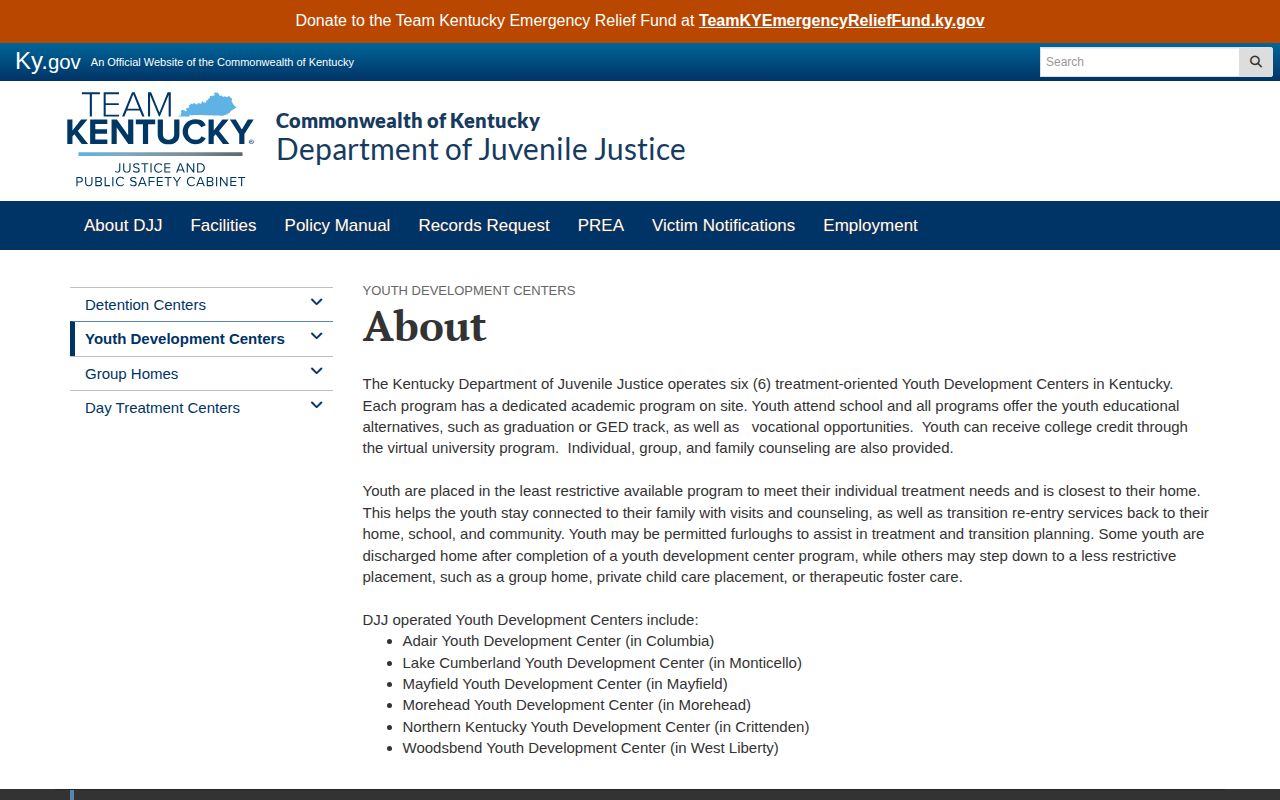
The captured statewide source places Adair within DJJ's treatment network. It does not authorize disclosure of a youth's identity or destination.
The specific Adair Youth Development Center source provides the local facility context.
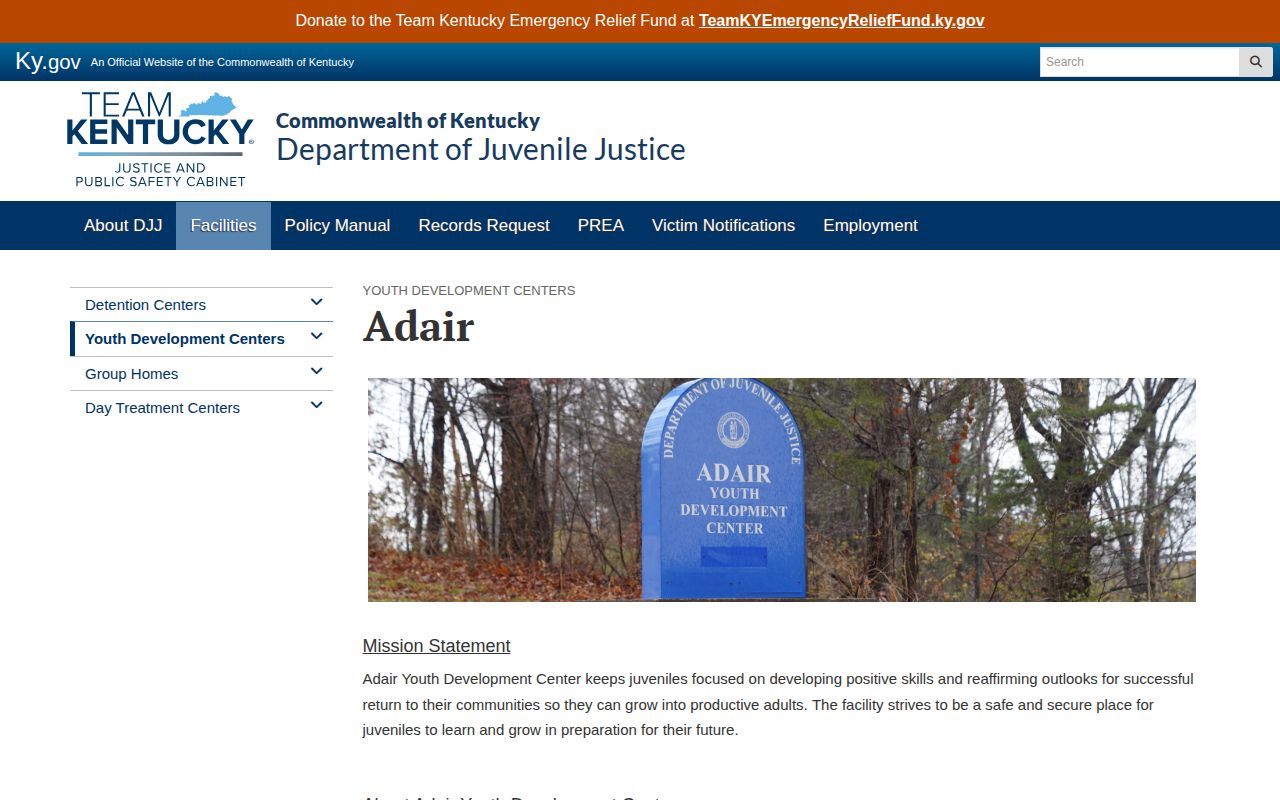
Together, the sources support the facility type, operator, and transition framework while leaving individual records within the authorized process.
Plan a Youth Transition
No public source established a fixed discharge hour, pickup entrance, transport schedule, or general property rule for Adair Youth Development Center. An authorized adult should confirm who may pick up the youth, what identification is required, where to arrive, and whether transport goes directly to another placement. Plans should come from the assigned case team.
A transition home can include services or supervision. A step-down placement has its own intake rules. Ask what documents, medicine, personal items, school information, and follow-up appointments accompany the youth, but expect protected health and education details to use secure channels. Do not publish them.
Transportation should not be assumed. A placement transfer may use agency-arranged travel, while an approved home discharge may follow different instructions. Confirm the plan shortly before departure because placement and court decisions can change.
Detention and Development Differ
The nearby Adair Regional Juvenile Detention Center is a maximum-security detention facility for an identified serious-charge group. The Youth Development Center is a post-adjudication treatment setting. Sharing a campus does not merge their roles, records, populations, or discharge processes.
A youth might move between levels under proper authority, but that change is a transfer or placement event until the official record says otherwise. Ask which facility sent the youth, which program received the youth, and what court or DJJ authority controls. Do not infer a home discharge from a change in facility.
The valid evidence chain is narrow: assigned case contact, DJJ placement or discharge record, juvenile court authority, and transition notice to an authorized person. It respects confidentiality while answering the practical questions of timing, destination, and ongoing requirements.
Adair Discharge Record Questions
An authorized requester should ask for the exact event without demanding the full treatment file. Useful points include program-completion date, effective discharge or transfer date, receiving placement, authority approving the move, and office responsible after departure. Treatment details may remain protected even when basic instructions can be shared.
Ask whether “discharge” ends DJJ commitment, ends only the residential program, or begins aftercare. Those outcomes sound alike but create different duties. A group-home or therapeutic-foster placement can continue services and supervision. The case plan and court authority control, not an adult corrections definition.
If a copy is needed, follow DJJ identity and authority checks. Do not send private health, education, or family information through an open web form. The agency or court can identify a secure method and explain which portions an authorized person may receive.
Placement Changes After Adair
The first destination may not be final. A youth can step down from the center and later move between approved community settings as needs and orders change. Preserve each dated notice. Read the newest valid court or DJJ decision with the prior discharge document so current placement is not confused with the original exit.
When placement changes, ask who coordinates services, transport, family contact, school continuity, and required appointments. These are case-management questions for an authorized participant, not public custody-search fields. A lack of public web information is normal and never proves that supervision ended.